
Formed to Serve Faithfully
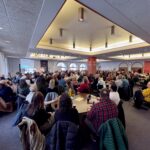
[Message by Petey Crowder, Sr. Pastor of Christ Presbyterian Church, to evangelical leaders gathered to support immigrant pastors in Minneapolis, Feb. 11, 2026. Edited for length.]
Thank you for having me. I’m grateful to be in a room like this with pastors and church leaders who carry real responsibility and who feel the weight of shepherding people through a moment that is as complex as it is charged.
It’s easy to think of the past few weeks as an interruption – that our formation has been interrupted and disrupted by unforeseen events in our city.
But I don’t think these weeks have disrupted our formation, I think they’ve revealed how our churches have been forming people. How we respond in this moment is shaped by how we have been discipled in the past.
Like many of your churches, CPC’s response to this moment didn’t begin when the headlines broke.
It emerged from years of slow, often unseen formation, through local partnerships and preaching and presence.
And it’s not always been easy or pretty. Over 5 years ago when we first partnered with Arrive Ministries, we faced resistance. We lost church members. Some accused us of taking a political “side” on immigration. Which is absurd. We didn’t decide who came. We didn’t write the policies. We simply decided to love the neighbors when they got here.
But that moment revealed something about discipleship! It exposed how deeply politics, fear, and media narratives had already formed many of our people long before any crisis arrived.
Jesus names this dynamic clearly in Luke 10. When he’s asked, “Who is my neighbor?”, he tells a story that we call the Good Samaritan….And the Good Samaritan doesn’t just expand the category of neighbor, it destroys our ability to define love on our own terms.
The Samaritan was the wrong person helping the wrong victim in the wrong way. It’s easy to get caught up in arguments about who is worthy of being loved as a neighbor, and yet Jesus says really clearly, “Go and do likewise.”
The Good Samaritan story exposes our formation. Our discipleship is either teaching people to recognize the image of God in every human being, or it’s training them to rationalize distance, fear, and exclusion.
And that’s one of the most important formative tasks before us right now: teaching and re-teaching the biblical truth that every single human bears the image of God.
As leaders, our words and our actions teach our people who we believe is redeemable, who belongs, and who falls outside the reach of grace.
Which brings me to the second part of the statement: How we respond in this moment will shape the discipleship and formation of the Church in the future.
The author Yuval Levin has observed that one of the great losses in our society is the erosion of spaces of formation.
We have plenty of platforms for celebrity and promotion, but fewer places that patiently form people in habits of faithfulness, humility, sacrifice, and love. The Church must not surrender that calling.
If we succumb to the pressure to respond to everything on social media, we will create anxious and reactive disciples.
If we lead primarily out of fear, we will form fearful Christians.
If we ignore what’s happening in our community, we will disciple insulation.
If we retreat from costly relationships, we will form people who know how to argue but do not know how to love.
But if we cultivate ongoing relationships with trusted partners who serve refugees and immigrant communities,
If we encourage our people to step outside their information silos and listen before they speak,
If we find ways to serve hurting people even when we disagree about the source of that hurt,
Then we will be forming Christians who know how to live faithfully in a divisive world.
When Jesus said in Matthew 5: “Love your enemies and pray for those who persecute you” that command was not spoken in a neutral environment. It was given under occupation, resentment, and a fractured society.
Jesus assumes that obedience will be costly and counterintuitive to what we are told is the right way to live in the world and that it will often involve serving people even when we deeply disagree about the causes of their suffering.
In the most contentious moments, the witness of the Church was advanced by those who stayed when others fled,
Those who cared when it was dangerous,
Those who welcomed strangers when it was inconvenient,
And those who remained long after the moment passed.
Even though your social media feed will disagree with this, Church history confirms that lives were changed not by those who spoke the loudest, but by those who stayed close to the suffering and sacrificed to serve them.
This is a leadership challenge for all of us. We can’t just issue statements. We can’t just mobilize short-term responses. We have to commit ourselves to long-term formation and faithfulness.
We have to show up now in ways that form us to keep showing up.
The bad news is: the evangelical churches in Minneapolis are not going to solve the issues facing the US immigration system.
But there’s some good news: the evangelical churches in Minneapolis are perfectly positioned to extend the extravagant grace and unlimited compassion of our Savior to our neighbors of all nationalities, ethnicities, and immigration status.
The question isn’t just “what can we do right now,” but how can we respond right now in a way that forms us to be obedient to Jesus into the future when it comes to loving our vulnerable neighbors?
What kind of people are we shaping?
What instincts are we reinforcing?
And what will our response now teach our churches about the character of Christ?
May we be the kind of leaders who do not turn our faces away. Who form people to live faithfully in the world God loves deeply. Let us act now in a way that shapes us to reflect the wideness of God’s mercy long after this moment has passed.
Amen.